 877-412-3651

Steel HP 9-4-30
HP 9-4-30 (UNS K91283) is a high-strength, low-alloy steel built around about 7.5% nickel, 4.5% cobalt and 0.30% carbon. It was developed for parts that need tensile strengths in the 220-240 ksi range together with high fracture toughness, so a crack or flaw is far less likely to lead to sudden failure than in conventional steels at the same strength.
It’s consumable electrode vacuum remelted for exceptional cleanliness, and its high nickel and cobalt content gives it deep hardenability, so heavy sections harden uniformly. Unlike most steels at this strength level, it also has good weldability, which is a big part of why it’s used in welded aerospace structures and pressure vessels.
HP 9-4-30 is used for aircraft structural components and landing gear parts, rocket motor cases, armor plate, pressure vessels, high-strength shafts and gears.
Tech Steel & Materials offers the alloy Steel HP 9-4-30 in 2 sub-type specifications, each in multiple and customized shapes/forms:
The Composition Of Steel HP 9-4-30
Limits below are for HP 9-4-30 per AMS 6524 and AMS 6526, weight %.
| Element | Min (%) | Max (%) |
| Carbon | 0.29 | 0.34 |
| Manganese | 0.10 | 0.35 |
| Silicon | — | 0.20 |
| Phosphorus | — | 0.010 |
| Sulfur | — | 0.010 |
| Chromium | 0.90 | 1.10 |
| Nickel | 7.00 | 8.00 |
| Cobalt | 4.25 | 4.75 |
| Molybdenum | 0.90 | 1.10 |
| Vanadium | 0.06 | 0.12 |
| Copper | — | 0.35 |
| Iron | Balance | Balance |
HP 9-4-30 Applications By Industry
- Aerospace structures: airframe fittings, wing and fuselage attach parts, arresting hooks and landing gear components where damage tolerance is critical.
- Space and missiles: rocket motor cases and high-pressure casings, where high strength, toughness and weldability are needed together.
- Defense: armor plate and structural parts for military vehicles and weapons systems.
- Pressure vessels: thick-walled, high-pressure vessels and containment hardware.
- Power transmission: heavily loaded shafts and gears that need strength through large sections.
Fabrication And Working Instructions
Machining: rough machine in the annealed or normalized and tempered condition, leaving stock to remove any decarburization after hardening. Finish machining or grinding after heat treatment should be done carefully to avoid overheating the surface.
Welding: good weldability is one of HP 9-4-30’s defining features. It’s commonly joined by GTAW and electron beam welding using matching filler and low-hydrogen practice, with preheat and interpass control and an appropriate post-weld heat treatment for the strength level required.
Forming and forging: it forges well, and sheet and plate can be formed in the annealed condition before hardening.
Corrosion protection and plating: it’s a low-alloy steel, so parts need plating or coating for corrosion protection. As with all ultra-high-strength steels, use low-hydrogen-embrittlement processes and bake promptly after plating.
Heat Treating And Mechanical Properties Of Steel HP 9-4-30
Both AMS 6524 and AMS 6526 material is supplied annealed for machining and forming. Parts are then hardened by austenitizing and quenching, followed by a sub-zero (refrigeration) treatment to complete the martensite transformation and a low-temperature double temper. Tempering is adjusted to balance strength and toughness: lower temperatures give the full 220-240 ksi class, while higher tempers trade some strength for more toughness. Exact times and temperatures should follow the applicable AMS or customer heat-treat specification.
| Condition | Tensile Strength, ksi (MPa) | Yield Strength 0.2% Offset, ksi (MPa) | Elongation in 4D (%) | Reduction of Area (%) |
| Hardened and tempered (minimum) | 220 (1517) | 190 (1310) | 10 | 40 |
| Hardened and tempered (typical) | About 230 (1590) | About 183-194 (1260-1340) | 14-15 | 46-52 |
Physical Constants Of HP 9-4-30
Typical physical characteristics.
| Property | Value |
| Density | 0.28 lb/in³ (7.75 g/cm³) |
| Melting Practice | Consumable electrode vacuum remelted |
| Supplied Condition | Annealed |
| Strength Class | 220-240 ksi tensile |
| Magnetic Behavior | Ferromagnetic |
HP 9-4-30 Vs 300M Vs 4340
HP 9-4-30 is usually chosen over 300M or 4340 when toughness and weldability matter more than absolute peak strength.
| Feature | HP 9-4-30 | 300M | 4340 |
| UNS | K91283 | K44220 | G43400 |
| Key Alloying | 7.5Ni, 4.5Co, 1Cr, 1Mo | 1.6Si, 1.8Ni, 0.8Cr, V | 1.8Ni, 0.8Cr, 0.25Mo |
| Typical Tensile Strength | 220-240 ksi | 280-305 ksi | Up to about 260-280 ksi |
| Fracture Toughness | Highest | Moderate | Lower at peak strength |
| Weldability | Good | Poor at full strength | Fair |
| Typical Use | Damage-tolerant welded structures, motor cases, armor | Landing gear, flap tracks | General high-strength parts |
HP 9-4-30 Equivalent Designations
Common designations and specifications for HP 9-4-30.
| Standard | Designation |
| UNS | K91283 |
| AMS | 6524 (sheet, strip, plate), 6526 (bars, forgings, tubing, rings) |
| Industry | BMS 7-182, MMS 2102, STO160LB0012 |
| Common Names | HP 9-4-30, 9-4-30, 9Ni-4Co-0.30C |
Select AMS
| AMS Number | Alloy | Type | UNS | Cross Ref. Spec | Misc./Shape | |
|---|---|---|---|---|---|---|
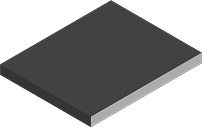
| AMS 6524 Plate | HP 9-4-30 | Steel | K91313 | - | Plate |
|
| AMS 6524 Sheet | HP 9-4-30 | Steel | K91313 | - | Sheet |

|
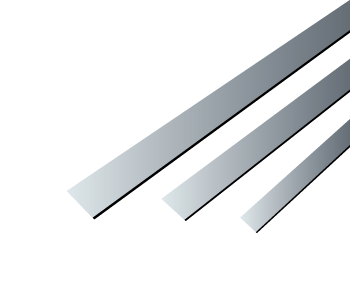
| AMS 6524 Strip | HP 9-4-30 | Steel | K91313 | - | Strip |
|
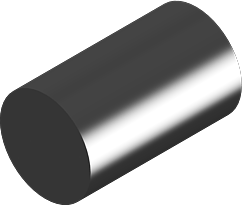
| AMS 6526 Bar | HP 9-4-30 | Steel | K91283 | - | Bar |
|
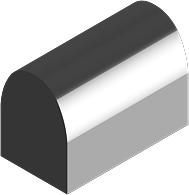
| AMS 6526 Forging | HP 9-4-30 | Steel | K91283 | - | Forging |
|
| AMS 6526 Ring | HP 9-4-30 | Steel | K91283 | - | Ring |
|
| AMS 6526 Tubing | HP 9-4-30 | Steel | K91283 | - | Tubing |
|
Request a Quote
Metal Weight Calculator
0 Lbs