 877-412-3651

Steel 9310

Steel 9310 (UNS G93106, AISI/SAE 9310) is a nickel-chromium-molybdenum carburizing steel with about 3.25% nickel, 1.2% chromium and 0.12% molybdenum on a low 0.07-0.13% carbon base. After carburizing it develops a hard, wear-resistant case of about 60-62 HRC over a strong, tough core, and its high nickel content gives it deep hardenability and excellent fatigue and impact strength, even in heavy sections.
9310 is supplied annealed or normalized for machining, then carburized, quenched and tempered at low temperature after the gear teeth or journals are cut. It forges well and machines at about 40% of B1112 in the annealed condition. For flight-critical parts it’s vacuum remelted to remove the inclusions that start fatigue cracks in highly loaded gear teeth.
It’s the standard steel for aircraft engine and helicopter transmission gears and pinions, and it’s also used for shafts, clutch parts, piston pins, bearings, boring bars and high-performance racing and industrial gearing.
Tech Steel & Materials offers the alloy Steel 9310 in 3 sub-type specifications, each in multiple and customized shapes/forms:
The Composition Of Steel 9310
| Element | Min (%) | Max (%) |
| Carbon (C) | 0.07 | 0.13 |
| Manganese (Mn) | 0.40 | 0.70 |
| Silicon (Si) | 0.15 | 0.35 |
| Nickel (Ni) | 3.00 | 3.50 |
| Chromium (Cr) | 1.00 | 1.40 |
| Molybdenum (Mo) | 0.08 | 0.15 |
| Phosphorus (P) | – | 0.025 (0.015 vacuum remelted) |
| Sulfur (S) | – | 0.025 (0.015 vacuum remelted) |
| Copper (Cu) | – | 0.35 |
| Boron (B) | – | 0.001 |
| Iron (Fe) | Balance | |
Remelted grades such as AMS 6265 hold tighter phosphorus and sulfur limits. Confirm against the AMS specification on your order.
Fabrication And Working Instructions
- Forging: Forge from 2000-2100°F (1093-1149°C), then normalize before machining.
- Annealing: Heat uniformly to 1475-1575°F (802-857°C) and furnace cool.
- Normalizing: Heat to 1650-1750°F (899-954°C) and air cool. This is commonly done before carburizing to refine grain and improve dimensional stability.
- Machining: About 40% of B1112 in the annealed condition. Cut gear teeth, splines and journals before carburizing, leaving a grinding allowance for finish work.
- Grinding: Carburized surfaces are finish ground. Use light cuts and plenty of coolant to avoid grinding burns, which lower gear fatigue life.
- Welding: 9310 isn’t normally welded in gear applications, and carburized cases should never be welded.
9310 AMS Specifications: Which Grade Do You Need?
| AMS | Melting Route | Best For |
| AMS 6260 | Air melted (electric furnace) | General aircraft-quality gears, shafts and industrial parts |
| AMS 6265 | Vacuum consumable electrode remelted (VAR) | Flight-critical engine and helicopter gears needing the highest cleanliness |
| AMS 6267 | Electroslag remelted (ESR) or vacuum arc remelted (VAR) | Premium gears where either remelting route is acceptable |
Remelting removes oxide inclusions and gases, which is what starts bending-fatigue and pitting failures in gear teeth. If the drawing calls for a remelted grade, AMS 6260 air-melted material can’t be substituted.
Carburizing, Heat Treating And Mechanical Properties Of Steel 9310
9310 is case hardened by carburizing at 1650-1700°F (899-927°C) to build up surface carbon, then hardened and tempered at low temperature. The quench can be direct from the carburizing temperature, or the part can be slow cooled and reheated to 1425-1545°F (774-841°C) before an oil quench, which refines the case and core. A temper at 250-350°F (121-177°C) follows. The finished case is about 60-62 HRC, and the core stays tough and strong.
| Treatment | Core Tensile | Core Yield | Elongation | Reduction of Area | Core Hardness |
| Carburize 1700°F, oil quench, temper 300°F | 187 ksi (1289 MPa) | 162 ksi (1117 MPa) | 15% | 51% | 375 HV |
| Carburize, slow cool, reheat 1425°F, oil quench, temper 300°F | – | – | – | – | 331 HV |
| Carburize, slow cool, reheat 1525°F, oil quench, temper 300°F | – | – | – | – | 363 HV |
Typical core values in carburized test bars. Case hardness is about 60-62 HRC. Values vary with section size and case depth.
Physical Properties Of Steel 9310
| Property | Value |
| Density | 0.284 lb/in3 (7.85 g/cm3) |
| Modulus of Elasticity (typical) | 29.7 x 10³ ksi (205 GPa) |
| Grain Size (normalized and tempered) | ASTM 5 or finer |
| Case Hardness (carburized) | 60-62 HRC |
| Machinability (annealed) | About 40% of B1112 |
| Magnetic | Ferromagnetic |
9310 vs 8620 vs 4320 Carburizing Steel
| Property | 9310 | 4320 | 8620 |
| Nickel content | ~3.25% | ~1.8% | ~0.55% |
| Hardenability | Highest | Medium | Lowest |
| Core toughness and fatigue strength | Highest | High | Good |
| Best for | Aircraft and helicopter gears, heavy sections | Heavy-duty industrial gears and bearings | General automotive and industrial gears |
| Relative cost | Highest | Medium | Lowest |
9310 Equivalent Designations
| Standard / Name | Designation |
| UNS | G93106 |
| AISI / SAE | 9310 |
| SAE AMS | 6260, 6265, 6267 |
| Military | MIL-S-7393 (Composition 3) |
| Trade names | Lescalloy 9310 VAC-ARC |
Select AMS
| AMS Number | Alloy | Type | UNS | Cross Ref. Spec | Misc./Shape | |
|---|---|---|---|---|---|---|
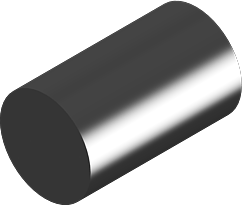
| AMS 6260 Bar | 9310 | Steel | G93106 | - | Bar |
|
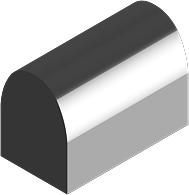
| AMS 6260 Forging | 9310 | Steel | G93106 | - | Forging |
|
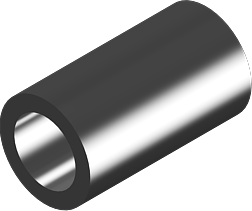
| AMS 6260 Tubing | 9310 | Steel | G93106 | - | Tubing |
|
| AMS 6265 Bar | 9310 | Steel | G93106 | - | Bar |
|
| AMS 6265 Forging | 9310 | Steel | G93106 | - | Forging |
|
| AMS 6265 Tubing | 9310 | Steel | G93106 | - | Tubing |
|
| AMS 6267 Bar | 9310 | Steel | G93106 | - | Bar |
|
| AMS 6267 Forging | 9310 | Steel | G93106 | - | Forging |
|
| AMS 6267 Tubing | 9310 | Steel | G93106 | - | Tubing |
|
Request a Quote
Metal Weight Calculator
0 Lbs