 877-412-3651

Steel 8620
8620 (UNS G86200) is a low-carbon nickel-chromium-molybdenum alloy steel that’s built for carburizing. Its 0.18-0.23% carbon keeps the core tough and ductile. The small additions of nickel, chromium and molybdenum give it good hardenability, so a carburized 8620 part ends up with a hard, wear-resistant case over a strong, shock-resistant core.
In the annealed or normalized condition, 8620 machines, forges and forms easily. It’s weldable by conventional gas and arc methods when it’s preheated and stress relieved. After carburizing, quenching and tempering, it’s typically case hardened to around 58-62 HRC, and the core keeps a strength of roughly 135 ksi minimum.
That mix of surface hardness and core toughness makes 8620 a go-to steel for gears, ring gears, pinions, camshafts, crankshafts, splined shafts, bearings and other wear parts in aerospace, defense, automotive and heavy equipment. The aerospace AMS grades add tighter chemistry and premium remelting for flight-critical components.
Tech Steel & Materials offers the alloy Steel 8620 in 4 sub-type specifications, each in multiple and customized shapes/forms:
The Composition Of Steel 8620
| Element | Min (%) | Max (%) |
| Carbon (C) | 0.18 | 0.23 |
| Manganese (Mn) | 0.70 | 0.90 |
| Silicon (Si) | 0.15 | 0.35 |
| Nickel (Ni) | 0.40 | 0.70 |
| Chromium (Cr) | 0.40 | 0.60 |
| Molybdenum (Mo) | 0.15 | 0.25 |
| Phosphorus (P) | — | 0.030 |
| Sulfur (S) | — | 0.040 |
| Iron (Fe) | Balance | |
Ranges shown are the standard SAE/AISI 8620 limits. The aerospace AMS specifications impose tighter limits on phosphorus, sulfur and residual elements, so always check the individual AMS page for exact requirements.
Fabrication And Working Instructions
- Forging: Forge from 2200°F down to about 1800°F (1205-980°C). Don’t work it below 1800°F. Forge before any hardening or carburizing.
- Machining: 8620 has a machinability rating of about 65% of AISI 1212 in the hot rolled or cold drawn condition. It’s best machined close to final size in the annealed or normalized state, because after carburizing it’s usually limited to grinding.
- Welding: It’s weldable by conventional gas and arc methods. Preheat to around 400°F (205°C) and apply post-weld heating to avoid cracking. Welding carburized parts isn’t recommended. For aerospace weld repair, matching filler wire is supplied to AMS 6375.
- Cold working: The low carbon content gives good ductility in the annealed condition, so 8620 cold forms, cold heads and bends well before heat treatment.
Heat Treating And Mechanical Properties Of Steel 8620
Annealing: Heat to about 1550°F (845°C), then furnace cool at no more than 50°F (28°C) per hour to 850°F (455°C), then air cool. This gives the softest condition for machining and forming.
Normalizing: Heat to about 1675°F (915°C) and air cool. Normalizing refines the grain and gives a uniform structure before machining or carburizing.
Carburizing: Carburize at 1650-1700°F (900-925°C) until you reach the case depth you need. Thin sections can be oil quenched straight from the carburizing temperature. Heavier sections are usually slow cooled, then reheated to about 1550-1575°F (845-855°C) and oil quenched to refine the case and core.
Tempering: Temper carburized parts at 250-300°F (120-150°C) to relieve stress while keeping the case hardness high. Hardened parts that haven’t been carburized can be tempered anywhere from 400-1300°F (205-705°C). Lower temperatures give higher hardness and strength.
Mechanical Properties Of 8620
| Condition | Tensile Strength, ksi (MPa) | Yield Strength, ksi (MPa) | Elongation (%) | Reduction Of Area (%) | Hardness |
| Annealed at 1600°F (870°C) | 77.8 (536) | 55.9 (385) | 31 | 62 | 149 HB |
| Normalized at 1675°F (915°C) | 92.1 (635) | 52.2 (360) | 26 | 60 | 183 HB |
| Carburized, quenched and tempered (core) | 135 min (930 min) | — | — | — | — |
| Carburized, quenched and tempered (case) | — | — | — | — | 58-62 HRC typical |
The annealed and normalized values are typical, not specification minimums. Carburized properties depend on section size, case depth and quench.
Physical Properties Of 8620
| Property | Value |
| Density | 0.284 lb/in3 (7.85 g/cm3) |
| Melting Range | 2590-2660°F (1420-1460°C) |
| Specific Heat | 0.114 BTU/lb-°F (477 J/kg-K) |
| Thermal Conductivity | 26.9 BTU/hr-ft-°F (46.6 W/m-K) |
| Mean Coefficient Of Thermal Expansion (70-212°F) | 6.6 x 10⁻⁶ /°F (11.9 x 10⁻⁶ /°C) |
| Electrical Resistivity | 23.4 microhm-cm |
| Modulus Of Elasticity | 29.7 x 10^6 psi (205 GPa) |
| Shear Modulus | 11.6 x 10^6 psi (80 GPa) |
| Poisson’s Ratio | 0.29 |
8620 Equivalent Designations
| Standard | Designation |
| UNS | G86200 |
| SAE / AISI | 8620 |
| AMS | 6274, 6276, 6277, 6375 |
| ASTM | A29, A322, A331, A505, A513 |
| Military | MIL-S-16974 |
| EN / W.Nr. | 20NiCrMo2-2 / 1.6523 |
| BS | 805M20, 805H20 |
| JIS | SNCM220 |
| AFNOR | 20NCD2 |
AMS 6274 vs AMS 6276 vs AMS 6277: Choosing The Right 8620 Grade
All three bar, forging and tubing specs use the same base 8620 chemistry. What sets them apart is how the steel is melted, and that controls cleanliness and fatigue performance:
- AMS 6274: Air-melted aircraft quality. It’s the standard choice for general aerospace and high-performance carburized parts.
- AMS 6276: Premium quality, consumable electrode vacuum melted. It has fewer inclusions for highly loaded gears and bearings where fatigue life matters most.
- AMS 6277: Vacuum arc or electroslag remelted, with very clean steel for flight-critical rotating parts.
- AMS 6375: Vacuum melted 8620 welding wire in environment-controlled packaging, used for matching-composition welds and repairs.
Common Applications Of 8620 Steel
- Aerospace and defense: transmission and gearbox gears, actuator components, splined shafts and bearing races
- Automotive and motorsport: ring and pinion gears, camshafts, crankshafts, transmission gears and fasteners
- Industrial and heavy equipment: gears, sprockets, arbors, bushings, chain components and wear-resistant shafts
- Oil and gas: drilling and pump components that need a hard surface over a tough core
Select AMS
| AMS Number | Alloy | Type | UNS | Cross Ref. Spec | Misc./Shape | |
|---|---|---|---|---|---|---|
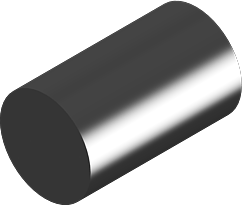
| AMS 6274 Bar | 8620 | Steel | G86200 | - | Bar |
|
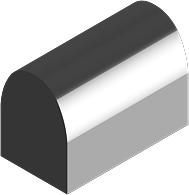
| AMS 6274 Forging | 8620 | Steel | G86200 | - | Forging |
|
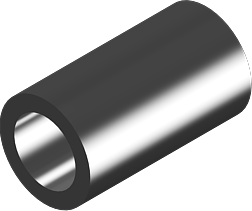
| AMS 6274 Tubing | 8620 | Steel | G86200 | - | Tubing |
|
| AMS 6276 Bar | 8620 | Steel | G86200 | - | Bar |
|
| AMS 6276 Forging | 8620 | Steel | G86200 | - | Forging |
|
| AMS 6276 Tubing | 8620 | Steel | G86200 | - | Tubing |
|
| AMS 6277 Bar | 8620 | Steel | G86200 | - | Bar |
|
| AMS 6277 Forging | 8620 | Steel | G86200 | - | Forging |
|
| AMS 6277 Tubing | 8620 | Steel | G86200 | - | Tubing |
|
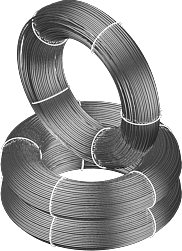
| AMS 6375 | 8620 | Steel | G86200 | - | Wire |
|
Request a Quote
Metal Weight Calculator
0 Lbs