 877-412-3651
Steel 135 Mod

Steel 135 Mod, widely known as Nitralloy 135 Modified or Nitralloy 135M (UNS K24065), is a low-alloy chromium-molybdenum-aluminum steel designed for nitriding. Its roughly 1.1% aluminum forms extremely hard aluminum nitrides at the surface during nitriding, producing a case harder than 60 HRC over a strong, tough, quenched-and-tempered core. Because nitriding runs at only 900–1100°F and needs no quench afterwards, parts come out of the process with very little distortion.
135 Mod is hardened and tempered before final machining, then nitrided as the last step. It is tempered above the nitriding temperature so that the core keeps its strength during the long nitriding cycle. The alloy is not considered weldable, so parts are machined from bar, forgings or tubing.
It is specified for aircraft and helicopter gears, pinions, crankshafts, camshafts, cams, splined shafts and bolts. It is also used in industrial and defense drive components, where surface wear and bending fatigue drive the design.
Tech Steel & Materials offers the alloy Steel 135 Mod in 3 sub-type specifications, each in multiple and customized shapes/forms:
The Composition Of Steel 135 Mod
| Element | Min (%) | Max (%) |
| Carbon (C) | 0.38 | 0.43 |
| Manganese (Mn) | 0.50 | 0.80 |
| Silicon (Si) | 0.20 | 0.40 |
| Chromium (Cr) | 1.40 | 1.80 |
| Molybdenum (Mo) | 0.30 | 0.40 |
| Aluminum (Al) | 0.95 | 1.30 |
| Nickel (Ni) | — | 0.25 |
| Copper (Cu) | — | 0.35 |
| Phosphorus (P) | — | 0.025 |
| Sulfur (S) | — | 0.025 |
| Iron (Fe) | Balance | |
Typical limits for AMS 6470/6472 material. Confirm exact limits against the AMS specification on your order.
Fabrication And Working Instructions
- Forging: Heat to 2000–2025°F (1093–1107°C) and do not forge below 1700°F (927°C). Air cool, then normalize or anneal before machining.
- Machining: Rough machine in the annealed or hardened-and-tempered condition. Stress relieve after heavy stock removal, below the tempering temperature, then finish machine to near-final size before nitriding.
- Nitriding allowance: The surface grows very slightly during nitriding, so leave only a small allowance. Where precision surfaces are needed, remove the brittle outer “white layer” (compound zone) by light grinding or lapping.
- Welding: Not recommended. The combination of carbon and aluminum makes 135 Mod prone to cracking, and welding would also spoil the nitrided case.
- Masking: Areas that must stay soft, such as threads or holes to be drilled later, can be protected from nitriding with copper plating or stop-off paints.
Heat Treating And Mechanical Properties Of Steel 135 Mod
135 Mod is heat treated in two stages. First, the core is hardened and tempered to the strength the part needs. It is austenitized at 1700–1750°F (927–954°C), quenched in oil or water, and tempered between 1000°F and 1300°F (538–704°C). The tempering temperature must be at least about 50°F above the planned nitriding temperature, so that the core does not soften during nitriding. After final machining, the part is gas nitrided at 900–1100°F (482–593°C) in dissociated ammonia. The cycle runs from roughly a day to several days, depending on the case depth required. Nitriding produces a surface above 60 HRC, and no quench follows, so distortion is minimal.
- Anneal: 1700°F (927°C) and slow cool, or subcritical anneal at 1250–1300°F (675–704°C)
- Normalize: 1800°F (982°C), hold 1–4 hours, air cool
- Harden: 1700–1750°F (927–954°C), ½ hour per inch of section, oil or water quench
- Temper: 1000–1300°F (538–704°C), 1 hour per inch of section
- Nitride: 900–1100°F (482–593°C), gas nitriding in dissociated ammonia
Mechanical Properties Of 135 Mod
| Condition | Tensile Strength | Yield Strength (0.2%) | Elongation | Reduction of Area | Hardness |
| AMS 6472 hardened and tempered (minimum) | 112 ksi (772 MPa) | 90 ksi (620 MPa) | 16% | 50% | 241–285 HB |
| Hardened and tempered core, section up to 1.5 in (typical) | 135 ksi (931 MPa) | 100 ksi (689 MPa) | 16% | — | 280–340 HB |
| Nitrided case (typical) | — | — | — | — | 60+ HRC |
Core properties depend on section size and tempering temperature. Case hardness and depth depend on the nitriding cycle.
Physical And Processing Data Of 135 Mod
| Property | Value |
| Density (approx.) | 0.282 lb/in3 (7.80 g/cm3) |
| Forging Range | 2000–2025°F (1093–1107°C), finish above 1700°F (927°C) |
| Hardening Temperature | 1700–1750°F (927–954°C) |
| Tempering Range | 1000–1300°F (538–704°C) |
| Nitriding Range | 900–1100°F (482–593°C) |
| Magnetic | Ferromagnetic |
135 Mod vs Nitralloy N vs Nitrided 4140
| Property | 135 Mod | Nitralloy N | 4140 (nitrided) |
| Key alloying | Cr-Mo + ~1.1% Al | Cr-Mo-Al + ~3.5% Ni | Cr-Mo, no Al |
| Nitrided case hardness | Highest (60+ HRC) | Very high | Lower (about 50s HRC) |
| Core strength | Good | Higher (Ni age-hardens during nitriding) | Good |
| Case brittleness | Harder, more brittle case | Tougher case | Tougher, softer case |
| Best for | Maximum wear resistance | Heavily loaded, high-core-strength parts | General-purpose, lower-cost parts |
135 Mod Equivalent Designations
| Standard / Name | Designation |
| UNS | K24065 |
| Trade names | Nitralloy 135 Modified, Nitralloy 135M, Nitriding 135M |
| SAE AMS | 6470, 6471, 6472 |
| Military | AMS-S-6709 (formerly MIL-S-6709) |
| ASTM | A355 (nitriding steel bars) |
| Near European equivalent | 41CrAlMo7-10 (W.Nr 1.8509) |
Select AMS
| AMS Number | Alloy | Type | UNS | Cross Ref. Spec | Misc./Shape | |
|---|---|---|---|---|---|---|
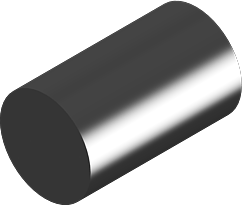
| AMS 6470 Bar | 135 Mod | Steel | K24065 | MIL-S-6709 | Bar |
|
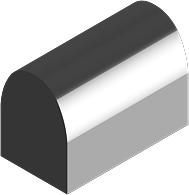
| AMS 6470 Forging | 135 Mod | Steel | K24065 | MIL-S-6709 | Forging |
|
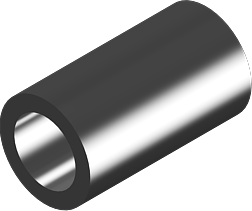
| AMS 6470 Tubing | 135 Mod | Steel | K24065 | MIL-S-6709 | Tubing |
|
| AMS 6471 Bar | 135 Mod | Steel | K24065 | - | Bar |
|
| AMS 6471 Forging | 135 Mod | Steel | K24065 | - | Forging |
|
| AMS 6471 Tubing | 135 Mod | Steel | K24065 | - | Tubing |
|
| AMS 6472 Bar | 135 Mod | Steel | K24065 | ASTM E 384 | Bar |
|
| AMS 6472 Forging | 135 Mod | Steel | K24065 | ASTM E 384 | Forging |
|
Request a Quote
Metal Weight Calculator
0 Lbs