 877-412-3651

Nickel Inconel 600

Inconel® 600 (UNS N06600, W.Nr. 2.4816) is a nickel-chromium alloy and a core member of the Inconel family. With at least 72% nickel and 14-17% chromium, it’s built for service from cryogenic temperatures to above 2000°F (1095°C), and it resists oxidation, carburizing and chloride-ion stress-corrosion cracking along the way.
Alloy 600 is a solid-solution alloy, so it isn’t precipitation hardenable. Its strength comes from cold work, and in the annealed condition it’s soft enough to form, machine and weld with standard shop practices. It keeps its toughness at low temperatures with no ductile-to-brittle transition, and it’s non-magnetic at room temperature.
You’ll find it in furnace hardware, chemical and food processing equipment, aerospace safety wire and exhaust parts, heating element sheaths and nuclear components. It shouldn’t be confused with Incoloy alloys, which are nickel-iron-chromium alloys that carry far more iron.
Tech Steel & Materials offers the alloy Nickel Inconel 600 in 4 sub-type specifications, each in multiple and customized shapes/forms:
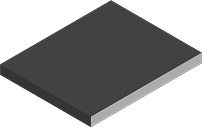
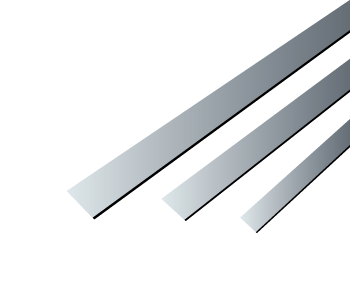
- AMS 5540 (Plate, Sheet or Strip)
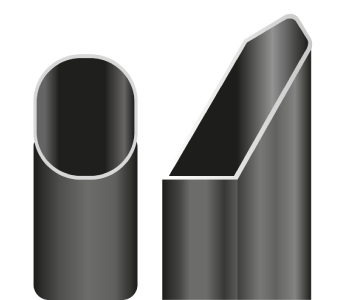
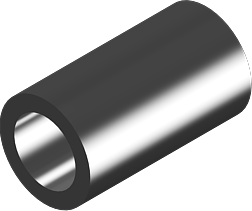
- AMS 5580 (Seamless Tubing or Custom Tube)
- AMS 5665 (Bar, Forging, Ring or Custom Tube)
- AMS 5961 (Spring Temper Wire)
We also offer a fully customized line of tube drawing and seamless tubing. Learn more about our custom tubing services.
The Composition Of Nickel Inconel 600
Inconel 600 gets its oxidation resistance from chromium and its resistance to reducing media, alkalis and chloride stress-corrosion cracking from its high nickel content. Limits below are per UNS N06600 (weight %).
| Element | Min (%) | Max (%) |
| Nickel (plus Cobalt) | 72.0 | — |
| Chromium | 14.0 | 17.0 |
| Iron | 6.00 | 10.00 |
| Carbon | — | 0.15 |
| Manganese | — | 1.00 |
| Sulfur | — | 0.015 |
| Silicon | — | 0.50 |
| Copper | — | 0.50 |
Inconel 600 Applications By Industry
Alloy 600’s mix of heat resistance, corrosion resistance and easy fabrication makes it a go-to material across several industries:
- Heat treating and thermal processing: furnace muffles, retorts, roller hearths, radiant tubes, and heat-treating baskets, trays and fixtures. When heated, the alloy forms a tight, adherent chromium oxide scale that protects the surface from further attack.
- Chemical processing: heaters, stills, bubble towers and condensers for fatty acids, evaporator tubes and flaking trays for sodium sulfide, and equipment handling caustic soda and abietic acid in pulp and paper production.
- Aerospace: safety (lock) wire, turbine seals, exhaust liners and other engine and airframe parts that see high temperatures.
- Electrical and electronics: heating element sheaths, thermocouple sheaths, spark plug electrodes and vacuum tube components.
- Food processing: equipment where its nickel-chromium chemistry resists corrosion from food products and cleaning solutions.
- Nuclear: a nuclear-grade version, Inconel 600T, has long been used for reactor components because it resists chloride-ion stress-corrosion cracking and corrosion by high-purity water. Note that in pressurized water reactor steam generators, Alloy 600 proved susceptible to primary water stress-corrosion cracking (PWSCC), so many newer steam generator tube designs use higher-chromium Alloy 690 instead.
Fabrication And Working Instructions
Hot working: Inconel 600 hot works between 1600°F and 2250°F (870-1230°C), with heavy reductions best done at 1900-2250°F (1040-1230°C). Avoid working between 1200°F and 1600°F (650-870°C), where ductility is low. Furnace atmospheres for forging and open annealing should be slightly reducing and must be sulfur-free, so clean parts of oil, grease, paint and marking crayons before heating. The alloy can be bright-heated in vacuum or dry hydrogen; otherwise, pickling is needed for a bright surface.
Cold working: Alloy 600 cold forms readily with standard tooling. It work hardens faster than mild steel, so plan for higher forming loads and intermediate anneals on severe operations.
Machining: It’s slightly more machinable than Type 304 stainless steel and slightly less machinable than Type 303 free-machining stainless. For best results:
- Use rigid, heavy-duty machines and tooling that’s large enough to carry away heat.
- Keep tools sharp with positive rake geometry, and maintain a steady feed so the tool cuts under the work-hardened layer rather than rubbing on it.
- Use generous amounts of coolant, and expect higher cutting forces and shorter tool life than with carbon steel.
- Avoid molybdenum disulfide lubricants on parts that will see service above 800°F (427°C).
Welding: Inconel 600 is readily joined by GTAW, GMAW, SMAW and submerged arc welding, as well as brazing and soldering. Matching filler metals are INCONEL Filler Metal 82 (ERNiCr-3) for GTAW, GMAW and SAW, and INCONEL Welding Electrode 182 (ENiCrFe-3) for SMAW. Clean joints thoroughly beforehand, since sulfur, lead and other low-melting contaminants can cause cracking.
Heat Treating And Mechanical Properties Of Nickel Inconel 600
Inconel 600 can’t be hardened by heat treatment. Instead, heat treatment is used to soften, stress relieve or condition the alloy, and cold work is used to raise strength. Exact times and temperatures depend on the amount of prior cold work, grain size and section size, so they’re often confirmed by testing.
- Annealing: about 1850°F (1010°C) for 15 minutes produces soft material. Grain growth begins around 1800°F (980°C), so keep soak times short when fine grain matters.
- Solution treating: 2000-2100°F (1090-1150°C) for 1-2 hours dissolves carbides and coarsens the grain, which improves creep and rupture strength for high-temperature service.
- Stress relieving: 1650°F (900°C) for 1 hour or 1450°F (790°C) for 4 hours relieves stresses and helps prevent stress-corrosion cracking in caustic service.
- Cooling: cool rapidly through 1000-1400°F (540-760°C) to avoid carbide sensitization.
Annealed Alloy 600 typically shows yield strengths of 25-50 ksi (170-345 MPa) with elongations of 35-55%, which is why it’s so easy to fabricate. Cold drawing raises strength considerably, and heavily cold-worked wire can reach tensile strengths around 220 ksi. Unlike many steels, the alloy gets stronger at cryogenic temperatures while staying tough, with no ductile-to-brittle transition.
Mechanical Properties Of Inconel 600
Typical room-temperature properties by product form, annealed condition unless noted. These are typical ranges, not specification minimums; see the individual AMS pages for required values.
| Product Form | Tensile Strength, ksi (MPa) | Yield Strength 0.2% Offset, ksi (MPa) | Elongation (%) | Hardness |
| Rod and Bar, Cold-Drawn | 80-100 (550-690) | 25-50 (170-345) | 35-55 | 65-85 HRB |
| Rod and Bar, Hot-Finished | 80-100 (550-690) | 30-50 (205-345) | 35-55 | 65-85 HRB |
| Plate, Hot-Rolled | 80-105 (550-725) | 30-50 (205-345) | 35-55 | 65-85 HRB |
| Sheet, Cold-Rolled | 80-100 (550-690) | 30-45 (205-310) | 35-55 | 88 HRB max |
| Strip, Cold-Rolled | 80-100 (550-690) | 30-45 (205-310) | 35-55 | 84 HRB max |
| Tube, Hot-Finished | 75-100 (520-690) | 25-50 (170-345) | 35-55 | — |
| Tube, Cold-Drawn | 80-100 (550-690) | 25-50 (170-345) | 35-55 | 88 HRB max |
| Wire, Cold-Drawn | 80-120 (550-830) | 35-75 (240-520) | 20-45 | — |
Physical Constants Of Inconel 600
Typical physical properties at room temperature (70°F / 20°C).
| Property | Imperial | Metric |
| Density | 0.306 lb/in³ | 8.47 g/cm³ |
| Melting Range | 2470-2575°F | 1354-1413°C |
| Specific Heat | 0.106 Btu/lb-°F | 444 J/kg-°C |
| Electrical Resistivity | 620 ohm-circ mil/ft | 1.03 µΩ-m |
| Thermal Conductivity | 103 Btu-in/ft²-h-°F | 14.9 W/m-°C |
| Mean Coefficient of Thermal Expansion | 5.8 µin/in-°F | 10.4 µm/m-°C |
| Modulus of Elasticity (Tension) | 31.1 x 10³ ksi | 214 GPa |
| Modulus of Rigidity (Torsion) | 11.7 x 10³ ksi | 80.8 GPa |
| Poisson’s Ratio | 0.327 | 0.324 |
| Curie Temperature | -192°F | -124°C |
| Magnetic Permeability (200 oersted) | 1.010 | 1.010 |
Corrosion And Oxidation Resistance
Inconel 600’s chemistry gives it a broad, balanced corrosion profile:
- Oxidation: its chromium content forms a protective scale, so it resists oxidation and scaling up to about 2000°F (1095°C). It’s better than commercially pure nickel under oxidizing conditions.
- Carburizing and nitriding atmospheres: it performs well in carburizing environments and resists nitriding, which is why it’s common in heat-treating fixtures.
- Chloride stress-corrosion cracking: the high nickel content makes it virtually immune to chloride-ion stress-corrosion cracking, a common failure mode for 300-series stainless steels.
- Alkalis and reducing media: it has excellent resistance to caustic soda and other alkaline solutions and keeps good resistance under reducing conditions.
- Acids: it resists many organic acids and compounds, but in mineral acids its resistance is only fair, since dissolved air alone usually isn’t oxidizing enough to keep it fully passive. Alloys with molybdenum, such as Inconel 625, are a better choice there.
- Limitations: avoid high-temperature sulfur-bearing atmospheres, which can cause sulfidation attack.
Inconel 600 Vs 601, 625, 690 And 316 Stainless Steel
Here’s how Alloy 600 compares with the grades buyers most often weigh against it. Strengths shown are minimums for annealed plate, sheet and strip (ASTM B168, B443 and A240).
| Alloy | UNS | Key Chemistry | Min Tensile / Yield, ksi | Best For |
| Inconel 600 | N06600 | 72Ni min, 14-17Cr, 6-10Fe | 80 / 35 | General heat and corrosion resistance to about 2000°F, caustics, chloride SCC resistance |
| Inconel 601 | N06601 | 58-63Ni, 21-25Cr, 1.0-1.7Al | 80 / 30 | Better cyclic oxidation resistance at higher temperatures (to about 2200°F) |
| Inconel 625 | N06625 | 58Ni min, 20-23Cr, 8-10Mo, 3.15-4.15Nb | 120 / 60 | Higher strength, pitting and crevice resistance, mineral acids, seawater |
| Inconel 690 | N06690 | 58Ni min, 27-31Cr, 7-11Fe | 85 / 35 | Nuclear steam generator tubing, PWSCC and oxidizing acid resistance |
| 316 Stainless | S31600 | 10-14Ni, 16-18Cr, 2-3Mo, Fe balance | 75 / 30 | Lower-cost corrosion resistance below about 1500°F; prone to chloride SCC |
Inconel 600 Equivalent Designations
Common international and industry designations for Alloy 600.
| Standard | Designation |
| UNS | N06600 |
| Werkstoff Nr. (W.Nr.) | 2.4816 |
| EN / DIN | NiCr15Fe |
| AFNOR | NC15Fe |
| BS | NA14 |
| JIS | NCF 600 |
| ISO | NiCr15Fe8 |
| ASTM / ASME | B166 / SB166 (rod, bar, wire), B168 / SB168 (plate, sheet, strip), B163 / B167 / B516 / B517 (tube, pipe), B564 (forgings) |
| AMS | 5540 (plate, sheet, strip), 5580 (seamless tubing), 5665 (bar, forgings, rings), 5687 (wire), 5961 (spring temper wire) |
| Military | MIL-DTL-23227, MIL-DTL-23228, MIL-DTL-23229 |
| Common Names | Inconel 600, Alloy 600, Nickel Alloy 600, Inconel 600T (nuclear grade) |
Select AMS
| AMS Number | Alloy | Type | UNS | Cross Ref. Spec | Misc./Shape | |
|---|---|---|---|---|---|---|
| AMS 5540 Inconel 600 Plate | Inconel 600 | Nickel | N06600 | - | Inconel 600 Plate |
|
| AMS 5540 Inconel 600 Sheet | Inconel 600 | Nickel | N06600 | - | Inconel 600 Sheet |

|
| AMS 5540 Inconel 600 Strip | Inconel 600 | Nickel | N06600 | - | Inconel 600 Strip |
|
| AMS 5580 Custom Tube | Inconel 600 | Nickel | N06600 | - | Custom Tube |
|
| AMS 5580 Inconel 600 Tubing | Inconel 600 | Nickel | N06600 | - | Inconel 600 Tubing |
|
| AMS 5665 Custom Tube | Inconel 600 | Nickel | N06600 | - | Custom Tube |
|
| AMS 5665 Inconel 600 Bar | Inconel 600 | Nickel | N06600 | - | Inconel 600 Bar |
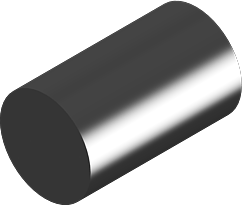
|
| AMS 5665 Inconel 600 Forging | Inconel 600 | Nickel | N06600 | - | Inconel 600 Forging |
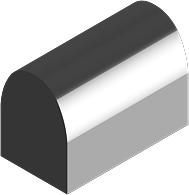
|
| AMS 5665 Inconel 600 Ring | Inconel 600 | Nickel | N06600 | - | Inconel 600 Ring |
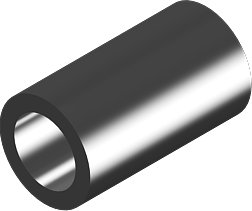
|
| AMS 5961 | Inconel 600 | Nickel Wire | N06600 | - | Inconel 600 Wire |
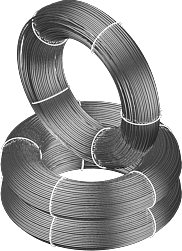
|
Request a Quote
Metal Weight Calculator
0 Lbs