 877-412-3651

Aluminum 6061

6061 aluminum (UNS A96061) is a heat-treatable aluminum-magnesium-silicon alloy and the most widely used aluminum alloy for structural and machined parts. In the T6 temper, it reaches a typical tensile strength of 45 ksi (310 MPa) at about a third of the weight of steel, with good corrosion resistance, excellent machinability and good weldability.
It’s easy to fabricate in almost every product form, from sheet and plate to extrusions, drawn tube, bar and forgings. Annealed (O) or T4 material forms easily and can be heat treated to T6 afterward. It anodizes cleanly and welds with 4043 or 5356 filler.
The alloy Aluminum 6061 is used for aircraft fittings and secondary structure, hydraulic and fluid lines, machined components, scuba tanks, bicycle frames, marine superstructures, heat sinks and general structural frames.
Tech Steel & Materials offers the alloy Aluminum 6061 in 21 sub-type specifications, each in multiple and customized shapes/forms:
Sheet and Plate
- AMS 4027 (Sheet T6, Plate T651)
- AMS 4025 (Sheet and Plate, O Temper)
- AMS 4021 (Alclad Sheet and Plate, O Temper)
- AMS 4022 (Alclad Sheet and Plate, T4, Cancelled Spec)
- AMS 4023 (Alclad Sheet and Plate, T6, Cancelled Spec)
- QQ-A-250/11 (Plate and Sheet, Cancelled Spec)
Tubing
- AMS 4079 (Close Tolerance Seamless Tubing, O Temper)
- AMS 4080 (Seamless Tubing, O Temper)
- AMS 4081 (Hydraulic Tubing, T4)
- AMS 4082 (Seamless Tubing, T6)
- AMS 4083 (Hydraulic Tubing, T6)
- AMS-T-7081 (Hydraulic Tubing, T6, Cancelled Spec)
- AMS-WW-T-700/6 (Drawn Seamless Tubing)
Bar, Rod and Extrusions
- AMS 4117 (Cold Finished Bar, Rod and Wire, T6/T651)
- AMS 4150 (Extrusions and Rings, T6)
- AMS 4173 (Extrusions, T6511)
- QQ-A-200/8 (Extruded Bar, Rod, Shapes, Tube and Wire)
- QQ-A-200/16 (Extruded Structural Shapes, Cancelled Spec)
- QQ-A-225/8 (Cold Finished Bar, Rod, Wire and Shapes, Cancelled Spec)
Forgings and Rings
Key Features of 6061 Aluminum
Strength-to-Weight Ratio: 6061-T6 reaches 45 ksi typical tensile strength at a density of just 0.0975 lb/in³ (2.70 g/cm³), about a third of the weight of steel. That’s why it’s used so widely for frames, fittings and machined structure.
Thermal and Electrical Conductivity: With thermal conductivity of 167 W/m·K and electrical conductivity of 43% IACS in the T6 temper, 6061 is a good choice for heat sinks, electronic chassis and bus bar supports.
Corrosion Resistance: 6061 forms a stable oxide layer that resists atmospheric, industrial and fresh water corrosion, and it has good resistance to stress corrosion cracking. It holds up well in coastal and splash-zone use, especially when anodized. For parts fully submerged in seawater, 5052 or 5083 is usually the better choice.
The Composition of 6061 Aluminum:
| Element | Range (%) |
| Magnesium, Mg | 0.80 – 1.20 |
| Silicon, Si | 0.40 – 0.80 |
| Copper, Cu | 0.15 – 0.40 |
| Chromium, Cr | 0.04 – 0.35 |
| Iron, Fe | 0.70 max |
| Zinc, Zn | 0.25 max |
| Manganese, Mn | 0.15 max |
| Titanium, Ti | 0.15 max |
| Others, Each | 0.05 max |
| Others, Total | 0.15 max |
| Aluminum, Al | Remainder (about 95.8 – 98.6) |
Magnesium and silicon combine to form magnesium silicide (Mg2Si), the precipitate that gives 6061 its strength when it’s aged. Copper adds strength, and chromium controls grain structure and improves stress corrosion resistance.
Weldability and Finishing
6061 welds well by TIG (GTAW) and MIG (GMAW). Use 4043 filler for better crack resistance and fluidity, or 5356 when you need higher weld strength, a better color match after anodizing, or better ductility. Don’t weld 6061 autogenously (without filler), because it’s prone to hot cracking.
Welding anneals the heat-affected zone, so a 6061-T6 weldment typically drops to around 24 ksi tensile near the weld, roughly half the strength of the T6 base metal. Where full strength is needed, the assembly has to be solution heat treated and aged again after welding.
6061 takes anodizing very well, including Type II decorative and Type III hard coat, along with chromate conversion coating, painting and powder coating. Alclad sheet anodizes poorly, so specify bare material for anodized parts.
Mechanical Properties of 6061 Aluminum by Temper
Typical room-temperature values. Spec minimums are lower: 6061-T6 sheet and plate, for example, is 42 ksi tensile and 35 ksi yield minimum.
| Property | 6061-O | 6061-T4 / T451 | 6061-T6 / T651 |
| Ultimate Tensile Strength | 18 ksi (124 MPa) | 35 ksi (241 MPa) | 45 ksi (310 MPa) |
| Yield Strength (0.2% Offset) | 8 ksi (55 MPa) | 21 ksi (145 MPa) | 40 ksi (276 MPa) |
| Elongation | 25% | 22% | 12% |
| Hardness, Brinell | 30 | 65 | 95 |
| Shear Strength | 12 ksi (83 MPa) | 24 ksi (165 MPa) | 30 ksi (207 MPa) |
| Fatigue Strength (5 x 10⁸ cycles) | 9 ksi (62 MPa) | 14 ksi (97 MPa) | 14 ksi (97 MPa) |
Physical Properties of 6061 Aluminum
| Property | Imperial | Metric |
| Density | 0.0975 lb/in³ | 2.70 g/cm³ |
| Melting Range | 1080-1206°F | 582-652°C |
| Modulus of Elasticity | 10,000 ksi | 68.9 GPa |
| Poisson’s Ratio | 0.33 | 0.33 |
| Thermal Conductivity (T6) | 1160 BTU·in/hr·ft²·°F | 167 W/m·K |
| Coefficient of Thermal Expansion, 68-212°F (20-100°C) | 13.1 µin/in·°F | 23.6 µm/m·°C |
| Specific Heat | 0.214 BTU/lb·°F | 896 J/kg·K |
| Electrical Conductivity (T6) | 43% IACS | 43% IACS |
| Hardness, Rockwell B (T6) | 60 | 60 |
Heat Treating 6061 Aluminum
Solution heat treatment: Heat clean, degreased parts in a calibrated furnace to 985°F (530°C) and hold long enough to dissolve the alloying elements. That’s typically about an hour per inch of thickness, and less for thin sheet. Quench rapidly in water, keeping the delay between furnace and quench short, so the magnesium and silicon stay in solution.
Aging: Left at room temperature, 6061 naturally ages to T4 over a few days. To reach T6, artificially age it at 320°F (160°C) for about 18 hours (common for sheet) or 350°F (177°C) for about 8 hours (common for extrusions and forgings).
Annealing: To soften 6061 to the O temper for forming, heat to 775°F (413°C), hold 2-3 hours, then cool at no more than 50°F (28°C) per hour down to 500°F (260°C).
6061 Tempers Explained
- O: Annealed. Softest and most formable, and it’s heat treated after forming.
- T4: Solution heat treated and naturally aged. Moderate strength, and it’s still formable.
- T451: T4 plate or bar, stretched to relieve quench stresses.
- T6: Solution heat treated and artificially aged. Full strength, and the most common temper.
- T651: T6 plate or bar, stretched before aging so it stays flat when machined.
- T6511: T6 extrusions, stretched and then lightly straightened.
- T652: T6 forgings, stress relieved by compression instead of stretching.
Applications & Common Use of 6061 Aluminum
- Aerospace: Machined fittings and brackets, hydraulic and fuel lines, secondary structure, light aircraft structure, satellite and launch vehicle rings and frames
- Defense: Military vehicle components, shelters, equipment racks and ground support equipment
- Automotive and Transport: Truck and trailer frames, wheels, suspension parts, drive shafts and roll cages
- Marine: Boat superstructures, masts, ladders, fittings and docks
- Industrial: Machined components, fixtures and jigs, pneumatic cylinders, valve bodies and tooling plate
- Electronics: Heat sinks, electronic enclosures, chassis and battery housings
- Construction: Structural frames, walkways, scaffolding, towers and railings
- Consumer and Sporting: Scuba tanks, bicycle frames, fishing reels, archery equipment and camera bodies
Want a quick overview of how 6061 is used in practice? Read our article on 10 practical facts about 6061 aluminum.
6061 vs 6063 vs 7075 Aluminum
| Feature | 6061-T6 | 6063-T6 | 7075-T6 |
| Typical Tensile Strength | 45 ksi (310 MPa) | 35 ksi (241 MPa) | 83 ksi (572 MPa) |
| Typical Yield Strength | 40 ksi (276 MPa) | 31 ksi (214 MPa) | 73 ksi (503 MPa) |
| Weldability | Good | Good | Poor |
| Corrosion Resistance | Good | Good | Fair |
| Machinability | Good | Fair | Good |
| Surface Finish / Anodizing | Good | Excellent | Fair |
| Relative Cost | Low | Lowest | High |
| Best For | General structural and machined parts | Architectural extrusions and trim | Highly stressed aircraft structure |
Choose 6061 when you need a balance of strength, weldability and corrosion resistance at a low cost. Step up to 7075 only when strength is critical and the part won’t be welded.
6061 Aluminum Equivalent Designations
| Standard | Designation |
| UNS | A96061 |
| Aluminum Association | 6061 |
| EN | EN AW-6061 / EN AW-AlMg1SiCu |
| Werkstoff Nr. | 3.3211 |
| ISO | AlMg1SiCu |
| JIS | A6061 |
| ASTM | B209 (sheet, plate), B210 (drawn tube), B211 (bar, rod, wire), B221 (extrusions), B247 (forgings) |
| AMS | AMS 4025, 4027, 4079, 4080, 4081, 4082, 4083, 4117, 4127, 4150, 4173, 4248 |
FAQ
What is Aluminum 6061?
Aluminum 6061 (UNS A96061) is a heat-treatable aluminum-magnesium-silicon alloy known for its good strength, corrosion resistance and excellent machinability. It’s the most widely used aluminum alloy for structural and machined components.
How strong is Aluminum 6061?
Yes, with TIG or MIG using 4043 or 5356 filler. Welding cuts strength in the heat-affected zone to around 24 ksi, roughly half of T6 strength, unless the part is heat treated again after welding.
What’s the difference between 6061-T6 and 6061-T651?
They have the same strength. T651 plate or bar is stretched 1-3% after quenching to relieve internal stresses, so it stays flat and true when it’s machined. T6 isn’t stress relieved.
Is Aluminum 6061 heat treatable?
Yes. It’s solution heat treated at 985°F (530°C), quenched and then aged, naturally for T4 or artificially at 320-350°F for T6.
Is Aluminum 6061 weldable?
Yes, with TIG or MIG using 4043 or 5356 filler. Welding cuts strength in the heat-affected zone by roughly 30-40% unless the part is heat treated again after welding.
Is Aluminum 6061 corrosion resistant?
Yes. It has good resistance to atmospheric, industrial and fresh water environments. For continuous seawater immersion, higher-magnesium alloys such as 5052 or 5083 are typically preferred.
What’s the difference between 6061 and 7075 aluminum?
7075-T6 is nearly twice as strong as 6061-T6, but it’s more expensive, less corrosion resistant and generally not weldable. 6061 is the better all-round choice unless maximum strength is required.
What’s the difference between Aluminum 6061 and Aluminum 6063?
6061 is stronger and is used for structural and machined parts. 6063 is weaker but extrudes into more complex shapes with a smoother surface finish, so it’s used for window frames, railings and architectural trim.
Select AMS
| AMS Number | Alloy | Type | UNS | Cross Ref. Spec | Misc./Shape | |
|---|---|---|---|---|---|---|
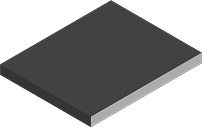
| AMS 4021 Plate | 6061 | Aluminum | A96061 | - | Plate |
|
| AMS 4021 Sheet | 6061 | Aluminum | A96061 | - | Sheet |

|
| AMS 4022 Plate | 6061 | Aluminum | A96061 | - | Plate |
|
| AMS 4022 Sheet | 6061 | Aluminum | A96061 | - | Sheet |
|
| AMS 4023 Plate | 6061 | Aluminum | A96061 | - | Plate |
|
| AMS 4023 Sheet | 6061 | Aluminum | A96061 | - | Sheet |
|
| AMS 4025 Plate | 6061 | Aluminum | A96061 | ASTM B209 | Plate |
|
| AMS 4025 Sheet | 6061 | Aluminum | A96061 | ASTM B209 | Sheet |
|
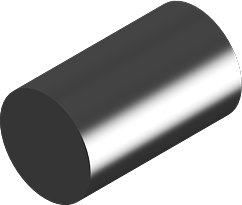
| AMS 4079 Round | 6061 | Aluminum | A96061 | WW-T-700/6 | Round |
|
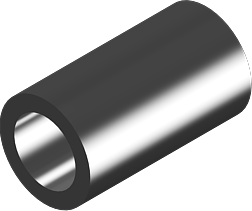
| AMS 4079 Tubing | 6061 | Aluminum | A96061 | WW-T-700/6 | Tubing |
|
| AMS 4080 | 6061 | Aluminum | A96061 | WW-T-700/6 | Tubing |
|
| AMS 4081 Round | 6061 | Aluminum | A96061 | Round |
|
|
| AMS 4081 Tubing | 6061 | Aluminum | A96061 | Tubing |
|
|
| AMS 4082 | 6061 | Aluminum | A96061 | ASTM B210 | Tubing |
|
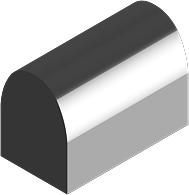
| AMS 4127 Forging | 6061 | Aluminum | A96061 | ASTM B247 | Forging |
|
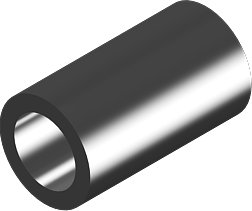
| AMS 4127 Ring | 6061 | Aluminum | A96061 | ASTM B247 | Ring |
|
| AMS 4248 | 6061 | Aluminum | A96061 | QQ-A-367 | Plate |
|
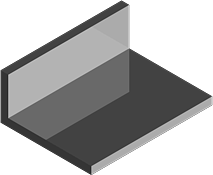
| AMS QQ A 200 16 Extrusion | 6061 | Aluminum | A96061 | QQ-A-200/16 | Extrusion |
|
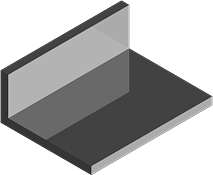
| AMS QQ A 200 16 Shapes | 6061 | Aluminum | A96061 | QQ-A-200/16 | Shapes |
|
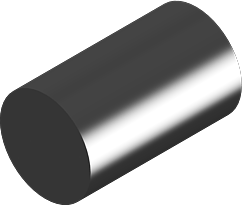
| AMS QQ A 200 8 Bar | 6061 | Aluminum | A96061 | QQ-A-200/8 | Bar |
|
| AMS QQ A 200 8 Extrusion | 6061 | Aluminum | A96061 | QQ-A-200/8 | Extrusion |
|
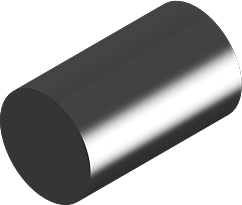
| AMS QQ A 200 8 Rod | 6061 | Aluminum | A96061 | QQ-A-200/8 | Rod |
|
| AMS QQ A 200 8 Shapes | 6061 | Aluminum | A96061 | QQ-A-200/8 | Shapes |
|
| AMS QQ A 200 8 Tubing | 6061 | Aluminum | A96061 | QQ-A-200/8 | Tubing |
|
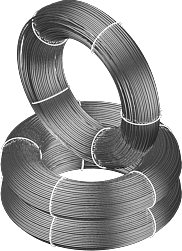
| AMS QQ A 200 8 Wire | 6061 | Aluminum | A96061 | QQ-A-200/8 | Wire |
|
| AMS QQ A 225 8A Bar | 6061 | Aluminum | A96061 | QQ-A-255/8 | Bar |
|
| AMS QQ A 225 8A Rod | 6061 | Aluminum | A96061 | QQ-A-255/8 | Rod |
|
| AMS QQ A 225 8A Shapes | 6061 | Aluminum | A96061 | QQ-A-255/8 | Shapes |
|
| AMS QQ A 225 8A Wire | 6061 | Aluminum | A96061 | QQ-A-255/8 | Wire |
|
| AMS QQ A 250 11 Plate | 6061 | Aluminum | A96061 | QQ-A-250/11 | Plate |
|
| AMS QQ A 250 11 Sheet | 6061 | Aluminum | A96061 | QQ-A-250/11 | Sheet |
|
| AMS T 7081 | 6061 | Aluminum | A96061 | MIL-T-7081D | Tubing |
|
| AMS WW T 700 6 | 6061 | Aluminum | A96061 | WW-T-700/6F | Tubing |
|
Request a Quote
Metal Weight Calculator
0 Lbs