 877-412-3651

Aluminum 1100

Aluminum 1100 (UNS A91100) is a commercially pure aluminum with a minimum of 99.00% aluminum and a small, controlled copper addition of 0.05-0.20%. It’s the strongest of the 1xxx pure aluminum grades, and it offers excellent corrosion resistance, high thermal and electrical conductivity, a bright reflective finish and outstanding formability.
1100 isn’t heat treatable. Its strength comes only from cold work, so it’s supplied in the soft annealed O temper or in strain-hardened tempers from H12 through H18. In the annealed condition it can be deep drawn, spun, stamped and bent to tight radii without cracking, and it welds easily by all common methods. Its tradeoff is low strength, roughly 13 ksi tensile annealed and 24 ksi in full-hard H18, so it isn’t used for structural parts.
Typical uses include heat exchanger and fin stock, chemical and food processing equipment, spun hollowware and cooking utensils, reflectors, nameplates and dials, rivets, electrical parts, and general sheet metal work.
Tech Steel & Materials offers the alloy Aluminum 1100 in 3 sub-type specifications, each in multiple and customized shapes/forms:
- AMS QQ-A-225/1 (Bar, Rod or Wire)
- AMS QQ-A-250/1 (Plate or Sheet)
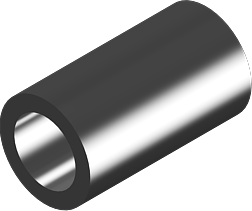
- WW-T-700/1 (Tubing)
The Composition Of Aluminum 1100
Limits below are per the Aluminum Association registration for alloy 1100 (UNS A91100), weight %.
| Element | Min (%) | Max (%) |
| Aluminum | 99.00 | — |
| Silicon + Iron | — | 0.95 |
| Copper | 0.05 | 0.20 |
| Manganese | — | 0.05 |
| Zinc | — | 0.10 |
| Beryllium (welding rod and wire only) | — | 0.0008 |
| Others, each | — | 0.05 |
| Others, total | — | 0.15 |
Aluminum 1100 Applications By Industry
1100 is chosen when formability, corrosion resistance and conductivity matter more than strength:
- HVAC and heat transfer: heat exchanger fins, fin stock and evaporator components, thanks to its high thermal conductivity.
- Chemical and food processing: tanks, piping, trays and handling equipment, where its purity resists chemical attack and won’t contaminate food products.
- Consumer and cookware: spun hollowware, cooking utensils, pans and giftware made by deep drawing and spinning.
- Electrical and lighting: conductors, reflectors, lamp housings and electronic parts that benefit from conductivity and a bright finish.
- Aerospace and defense: non-structural parts, rivets, gaskets, shims, spacers and nameplates.
- Architectural and decorative: trim, dials, signage and nameplates that take anodizing and chemical brightening well.
Fabrication And Working Instructions
Forming: 1100 has the best cold formability of any common aluminum alloy. In the O temper it can be deep drawn, spun, stretch formed, roll formed and bent flat on itself. It can be cold worked heavily without intermediate annealing, and it hot forges easily.
Machining: it’s soft and gummy in the annealed condition, so it machines best in the harder H14-H18 tempers. Use sharp tools with high rake angles, high speeds and plenty of lubricant to avoid built-up edge. Carbide and high-speed steel tooling both work well.
Welding: 1100 welds readily by GTAW, GMAW, resistance and gas welding, and it’s also easy to braze and solder. Use ER1100 filler when welding it to itself. To join 1100 to 6061 or other 6xxx alloys, ER4043 filler is the usual choice because it resists hot cracking. Welding anneals the heat-affected zone back to O-temper strength.
Finishing: it anodizes to a clear, uniform finish and responds well to chemical brightening and polishing, which is why it’s popular for reflectors and decorative parts.
Heat Treating And Mechanical Properties Of Aluminum 1100
Aluminum 1100 can’t be hardened by solution treating or aging, so it can’t be age hardened like 2xxx, 6xxx or 7xxx alloys. Its properties are controlled entirely by cold work and annealing:
- Annealing (O temper): heat to about 650°F (345°C), hold until the part is heated through, then air cool. This fully softens work-hardened material for further forming.
- Strain hardening (H1x tempers): cold rolling or drawing raises strength in steps. H12 is quarter-hard, H14 half-hard, H16 three-quarter-hard and H18 full-hard. Strength roughly doubles from O to H18 while ductility drops.
- Elevated temperature: strength falls off noticeably above about 300°F (150°C), and long exposure at 400-500°F will soften cold-worked tempers.
Mechanical Properties Of Aluminum 1100
Typical room-temperature properties by temper. These are typical values, not specification minimums.
| Temper | Tensile Strength, ksi (MPa) | Yield Strength, ksi (MPa) | Elongation in 2 in. (%) | Brinell Hardness (500 kg) | Shear Strength, ksi (MPa) | Fatigue Strength, ksi (MPa) |
| O | 13 (90) | 5 (34) | 35-45 | 23 | 9 (62) | 5 (34) |
| H12 | 16 (110) | 15 (103) | 12-25 | 28 | 10 (69) | 6 (41) |
| H14 | 18 (124) | 17 (117) | 9-20 | 32 | 11 (76) | 7 (48) |
| H16 | 21 (145) | 20 (138) | 6-17 | 38 | 12 (83) | 9 (62) |
| H18 | 24 (165) | 22 (152) | 5-15 | 44 | 13 (90) | 9 (62) |
Elongation ranges cover 1/16 in. sheet (lower value) to 1/2 in. round specimens (higher value). Fatigue strength is based on 500 million cycles.
Physical Constants Of Aluminum 1100
Typical physical properties at room temperature.
| Property | Imperial | Metric |
| Density | 0.098 lb/in³ | 2.71 g/cm³ |
| Melting Range | 1190-1215°F | 643-657°C |
| Specific Heat | 0.214 Btu/lb-°F | 904 J/kg-K |
| Thermal Conductivity, O Temper | 1540 Btu-in/ft²-h-°F | 222 W/m-K |
| Thermal Conductivity, H18 Temper | 1510 Btu-in/ft²-h-°F | 218 W/m-K |
| Electrical Conductivity, O / H18 | 59% / 57% IACS | 59% / 57% IACS |
| Mean Coefficient of Thermal Expansion (68-212°F) | 13.1 µin/in-°F | 23.6 µm/m-K |
| Modulus of Elasticity | 10.0 x 10³ ksi | 69 GPa |
| Poisson’s Ratio | 0.33 | 0.33 |
Corrosion Resistance Of Aluminum 1100
- Atmospheric corrosion: its high purity gives it the best general corrosion resistance of the common aluminum alloys. A thin, self-healing aluminum oxide film forms instantly in air and protects the surface.
- Chemical and food service: it resists many organic chemicals, foods and beverages, and it won’t discolor or contaminate products, which is why it’s used for food-contact equipment.
- Water and marine: it performs well in fresh water and moderately well in marine air, though 5xxx alloys are usually preferred for direct seawater service.
- Stress-corrosion cracking: 1100 isn’t susceptible to SCC or exfoliation, unlike many high-strength heat-treatable alloys.
- Limitations: like all aluminum, it’s attacked by strong alkalis and by strong non-oxidizing acids such as hydrochloric acid. Avoid direct contact with copper, brass or steel in wet service to prevent galvanic corrosion.
Aluminum 1100 Vs 3003 Vs 6061
1100 is often compared with 3003, the next step up in strength among non-heat-treatable alloys, and with 6061, the most common heat-treatable structural grade. Typical values are shown.
| Feature | 1100 | 3003 | 6061 |
| Alloy Type | Commercially pure, non-heat-treatable | Al-Mn, non-heat-treatable | Al-Mg-Si, heat-treatable |
| Typical Tensile, Annealed (O), ksi | 13 | 16 | 18 |
| Typical Tensile, Hardest Common Temper, ksi | 24 (H18) | 29 (H18) | 45 (T6) |
| Electrical Conductivity (O temper) | 59% IACS | 50% IACS | 47% IACS |
| Formability | Excellent | Excellent | Good (O), fair (T6) |
| Corrosion Resistance | Excellent | Excellent | Very good |
| Best For | Maximum formability, conductivity and finish | Formed parts that need a bit more strength | Structural and machined parts |
Aluminum 1100 Equivalent Designations
Common international and industry designations for aluminum 1100.
| Standard | Designation |
| UNS | A91100 |
| ISO / EN | Al99.0Cu / EN AW-1100 |
| ASTM | B209 (sheet, plate), B210 (drawn tube), B211 (bar, rod, wire), B221 (extrusions), B241 (pipe, tube) |
| AMS / Federal | AMS-QQ-A-225/1 (bar, rod, wire), AMS-QQ-A-250/1 (plate, sheet), WW-T-700/1 (tubing), AMS 4003 |
| Welding Filler | ER1100 (AWS A5.10) |
| Common Names | 1100 Aluminum, Aluminum Alloy 1100, Al 1100, 2S (historic) |
Select AMS
| AMS Number | Alloy | Type | UNS | Cross Ref. Spec | Misc./Shape | |
|---|---|---|---|---|---|---|
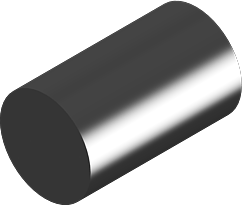
| AMS QQ A 225 1A Bar | 1100 | Aluminum | A91100 | QQ-A-225/1 | Bar |
|
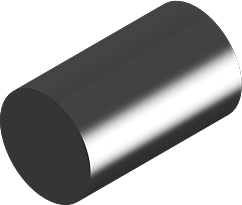
| AMS QQ A 225 1A Rod | 1100 | Aluminum | A91100 | QQ-A-225/1 | Rod |
|
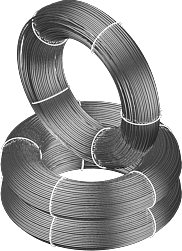
| AMS QQ A 225 1A Wire | 1100 | Aluminum | A91100 | QQ-A-225/1 | Wire |
|
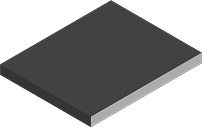
| AMS QQ A 250 1 Plate | 1100 | Aluminum | A91100 | QQ-A-250/1 | Plate |
|
| AMS QQ A 250 1 Sheet | 1100 | Aluminum | A91100 | QQ-A-250/1 | Sheet |

|
| AMS WW T 700 1 | 1100 | Aluminum | WW-T-700/1E | Tubing |
|
Request a Quote
Metal Weight Calculator
0 Lbs